 5 min read
On the evening of 20 October 2026, a fire broke out in a scrap godown at Sakinaka in Mumbai’s Andheri East. Firefighters needed more than six hours to put it out. Two people died and four were injured, and the bodies were found in the area where aerosol containers were stored.
Godown fires make the news across India almost every month. The NCRB’s Accidental Deaths and Suicides in India 2024 report recorded 5,971 fire accidents and 5,888 deaths nationwide. Storage buildings carry a special risk: a lot of fuel, very few people, and long hours with nobody watching.
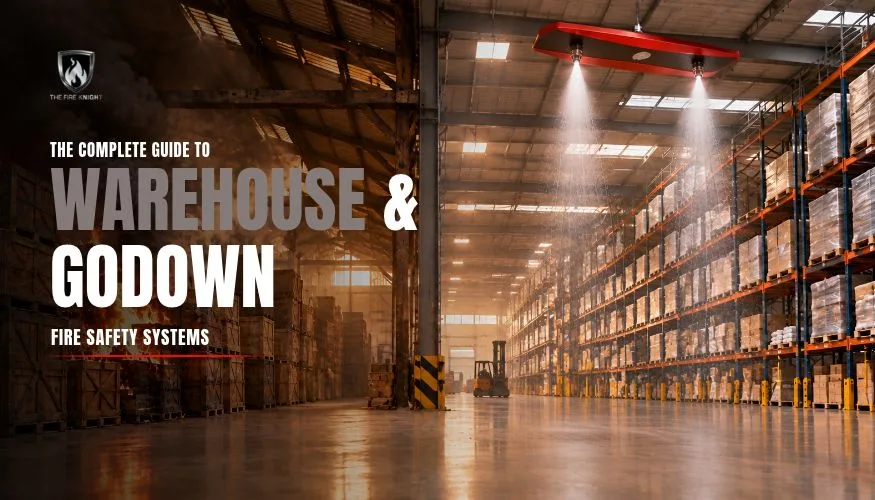
This guide covers what a complete warehouse and godown fire safety system looks like, which Indian codes apply, and where autonomous suppression aids fit.
Why Warehouses and Godowns Burn So Fast
- High fire load. Cartons, plastic wrap, textiles, timber and chemicals sit close together.
- Height and density. Tall stacks let flames climb quickly, and blocked aisles slow firefighters.
- Unattended hours. Many godowns are locked at night, on Sundays and during festivals. A fire can grow for an hour before a neighbour notices smoke.
- Electrical faults. Old wiring, overloaded sockets, lights above stock and forklift charging points are common ignition sources.
- Mixed storage. Aerosols, gas cylinders or solvents kept beside ordinary goods can turn a small fire into an explosion risk. Our guide to commercial fire risks and prevention covers more of these hazards.
The Indian Rules That Apply to Warehouses
The National Building Code of India 2016, Part 4 classifies warehouses and godowns as Group H (Storage) buildings. It sets the minimum fire fighting installations based on the building’s height, floor area and use. The Bureau of Indian Standards also publishes IS 3594, the code of practice for fire safety of general storage and warehousing, including cold storage, which is currently under revision.
State fire services enforce these rules through the Fire NOC. Many states grade godowns by hazard level. Goa’s fire department, for example, issues separate NOCs for low, moderate and high hazard godowns and warehouses. If manufacturing or processing also happens on site, Section 38 of the Factories Act 1948 adds its own fire precautions.
| System | What it does | Indian standard |
| Portable fire extinguishers | First attack on a small fire by trained staff | IS 2190 |
| Automatic detection and alarm | Early warning of smoke or heat | IS 2189 |
| Automatic sprinklers | Water discharge over stock when heat is detected | IS 15105 |
| Hydrants and hose reels | Firefighting water for trained teams and the fire service | IS 13039 |
| Compartmentation and exits | Limits fire spread and protects escape routes | NBC Part 4, IS 3594 |
Exact requirements depend on your state, building size, rack height and the goods you store. Always confirm the design with a licensed fire consultant and your local fire service.
The Five Layers of a Complete Warehouse Fire Safety System
- Prevention. Good housekeeping, clear space below sprinklers and lights, separate storage for hazardous goods, and an annual electrical audit.
- Detection. Smoke detectors suit most storage areas. Tall roofs often need beam or aspirating detectors. In a locked godown, an alert must also reach a phone, not just a siren nobody hears.
- Alarm and evacuation. Sounders, marked exits, clear aisles and regular drills.
- Suppression. Sprinklers, extinguishers and hydrants, with targeted suppression for high risk zones such as panels and charging bays.
- Response. Fire tender access, reliable water supply, a trained team and a current site plan.
Closing the Unattended-Hours Gap
Most code-required systems depend on people being present, or on the fire service arriving in time. The weak point is the first few minutes inside a locked godown. Autonomous fire suppression aids detect a fire, confirm it, discharge suppressant on their own and then send an alert.
- The Protector suits indoor zones such as packing areas, site offices and small storage rooms.
- The Comodo protects enclosed hazards such as electrical panels, UPS rooms and battery charging cabinets.
- The Guardian covers outdoor yards, open storage and the building perimeter.
| ImportantThese are fire suppression aids. They do not replace sprinklers, hydrants, extinguishers or the fire service, and they do not secure a Fire NOC on their own. They add a layer of early response to a code-compliant design, as part of wider industrial fire suppression systems. |
Common Mistakes to Avoid
- Stock stacked right up to sprinkler heads or light fittings.
- Extinguishers hidden behind pallets, or past their refill date.
- Alarm panels were silenced after a few false alarms and never reset.
- Exit doors padlocked from outside for security.
- Fire NOC not updated after the goods, layout or rack height changed.
Protect Your Stock Before the Shutters Come Down
Start with a code-compliant system, then cover the hours and corners it cannot reach. Talk to our fire safety team for a site assessment, or find a Fire Knight distributor near you.
Frequently Asked Questions
It depends on your state’s rules, floor area, height and the goods stored. Even a small godown holding hazardous material may need one, so check with your state fire service.
It depends on the fire class. ABC dry powder suits mixed goods, while CO2 is better near electrical panels. Selection and placement should follow IS 2190.
NBC Part 4 decides this by height, area and occupancy, and many large warehouses need them. Your fire consultant can confirm what applies.
Walk the site every month to check extinguishers, exits and the alarm panel. Arrange professional servicing at the intervals your fire service and the relevant IS codes require.