 5 min read
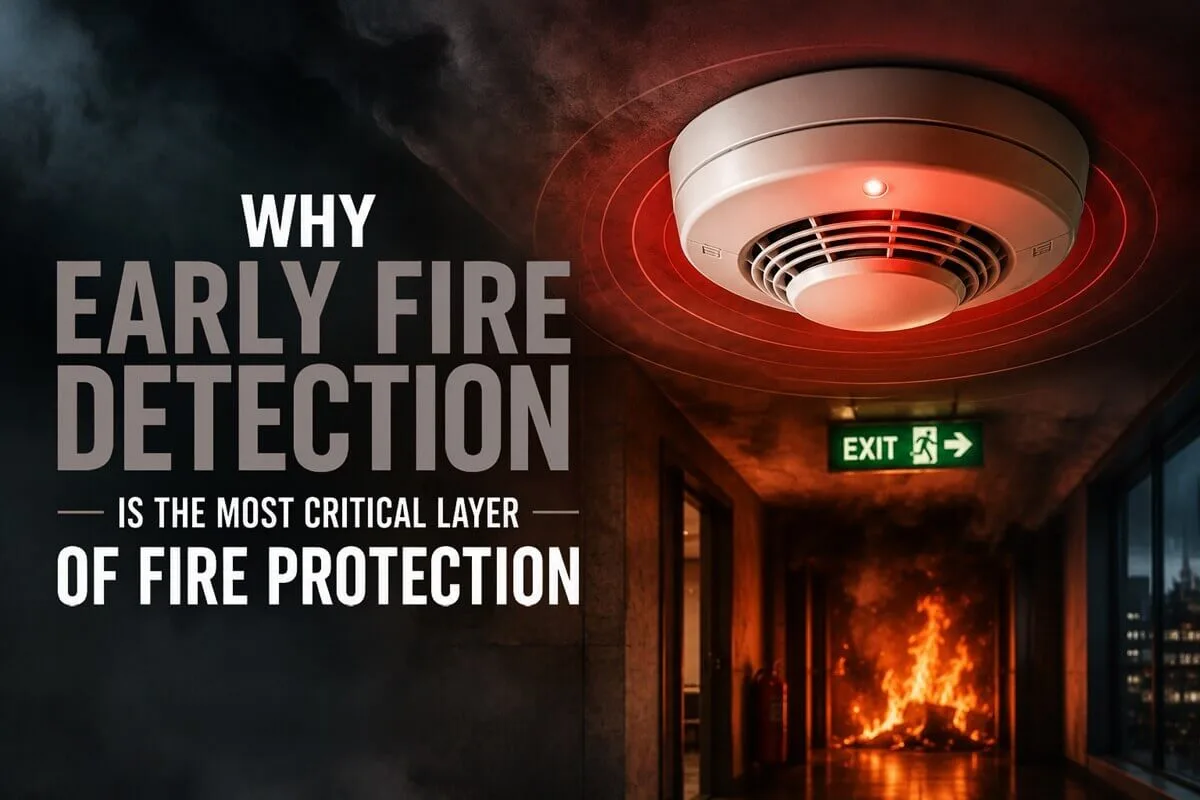
In a fire, the clock is everything. A fire can double in size approximately every 30 to 60 seconds, and the National Crime Records Bureau (NCRB) recorded over 7,500 accidental fire deaths across India in a single year. Yet most damage does not come from the fire you can see. It comes from the minutes lost before anyone notices it at all. That is why early fire detection, not suppression, is the single most important layer of any fire protection strategy.
Suppression systems fight a fire that has already started. Detection buys back the minutes that decide whether you face a small, contained incident or a total loss. For Indian conditions such as dense urban buildings, high-load electrical wiring, and remote industrial sites, detecting a fire in its earliest stage is the difference between a quick response and a catastrophe.
The Real Cost of a Delayed Response
A fire usually begins small. It could be an overloaded socket, a failing lithium battery, or an overheated motor. In its first few minutes it produces heat, smoke, and gases long before visible flames. Miss that window and the losses compound fast:
- Property and stock damage that insurance rarely covers in full
- Business interruption and lost production days
- Irreplaceable equipment, servers, and records
- Serious risk to occupants from smoke and toxic gases
Fire safety is not only about the flames. For many businesses, operational downtime following a fire often exceeds the direct cost of physical damage. Lost production, broken supply chains, and delayed reopening can cripple an organisation long after the debris is cleared. Guidance from the National Fire Protection Association (NFPA) shows that early detection and rapid response best limit this wider damage.
Under the National Building Code of India (NBC 2016), Part 4, many commercial, industrial, institutional, and high-rise occupancies are required to install automatic fire detection and alarm systems under applicable provisions. Early warning saves lives before suppression is ever needed.
How Modern Fire Detection Has Evolved
Older systems relied on a single smoke alarm and someone happening to be nearby. Today’s early fire detection technology is proactive and continuous. Four capabilities set modern systems apart:
- Intelligent monitoring: sensors track heat, smoke, and infrared signatures continuously, flagging a hazard before flames spread.
- Real-time alerts: instant notifications reach owners, facility managers, and responders the moment a threat appears.
- Automated response: the system can trigger pre-programmed emergency responses during the earliest stages of a fire event.
- Remote visibility: connected monitoring gives live status from anywhere, which matters most for unmanned or remote sites.
Detection equipment certified by UL Solutions adds assurance that sensors will perform when it counts.
Detection Methods Compared
| Detection Type | How It Works | Best For |
| Smoke (ionisation/optical) | Senses smoke particles in air | Homes, offices, corridors |
| Heat / thermal | Triggers on rapid temperature rise | Kitchens, garages, dusty areas |
| Infrared (IR) flame | Detects the IR signature of a flame | Outdoor, industrial, wildfire zones |
| Multi-sensor | Combines smoke, heat, and IR to cut false alarms | Server rooms, critical assets |
Fire Risks Across Indian Industries
Different environments fail in different ways. A layered detection plan should match the hazard:
1. Commercial Buildings
Electrical faults, HVAC systems, and crowd density. See our guide on common fire risks in commercial buildings.
2. Industrial Facilities
Manufacturing plants and warehouses often contain machinery, combustible materials, and high-energy processes that increase fire risks.
3. Transportation & Fleet Operations
Engine, fuel, and battery fires need in-vehicle detection, as covered in why every vehicle needs a fire safety device.
4. Rural & Remote Infrastructure
Telecom towers, solar farms, and wildfire-prone sites need autonomous outdoor detection.
Building a Layered Fire Protection Strategy
No single device makes a building safe. Effective protection stacks several layers, with detection at its core:
- Risk assessment: map your specific hazards and fire classes (A, B, C, E).
- Early detection: the layer that buys time. Place sensors where fires actually start.
- Real-time alerting: make sure the right people are notified instantly.
- Suppression support: an automated aid to slow fire growth in the first minutes.
- Emergency response planning: clear evacuation routes and a rehearsed plan.
- Regular maintenance: detection only works if it is tested. Read why regular maintenance isn’t optional.
Organizations that implement a layered approach are better positioned to reduce losses and improve operational resilience.
Common mistake: treating detection as a one-time install. Sensors gather dust, batteries drain, and alarms drift. A device that fails silently offers zero protection, so schedule quarterly testing.
Conclusion
Fire safety is no longer only about responding to emergencies. It is about stopping them before they become disasters. Early detection gives you the most valuable resource in any fire, which is time. Time to decide, to evacuate, and to act while an incident is still small and survivable. The wider health impact of smoke and burns, documented by the World Health Organization (WHO), makes this speed even more vital.
The Fire Knight builds advanced autonomous detection and suppression aid systems engineered for Indian conditions, from homes to remote industrial sites. To protect your people and property, talk to our fire safety experts for a free assessment, or become a distributor to bring this technology to your region.
Frequently Asked Questions
Yes. NBC 2016 and state fire service rules mandate automatic detection and alarm systems for most commercial, industrial, and high-rise buildings.
Detection identifies a fire early and raises the alarm. Suppression works to control or slow it. Detection comes first, because you cannot fight a fire you do not know about.
In India, electrical faults are a leading cause. Detection should be prioritised around electrical panels, kitchens, machinery, and battery storage.