 4 min read
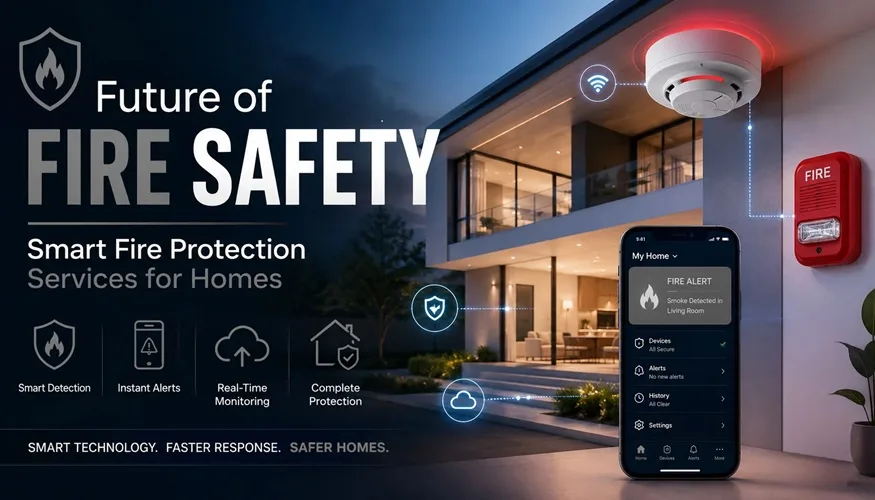
Technology has changed almost every part of how we live, and home fire safety is no exception. For decades, Indian homes relied on a basic smoke alarm and a manual extinguisher, both of which depend entirely on a person being present, alert, and quick to react. Smart fire protection changes that. It shifts home safety from reactive to proactive, using automation, artificial intelligence, and connected devices to detect and respond to a fire far faster than any person can.
This guide explains what smart fire protection actually means for an Indian home, the technology behind it, and why it is worth upgrading now.
Why Smart Fire Protection Matters
House fires remain a leading cause of property loss and death in India. The National Crime Records Bureau (NCRB) links a large share of accidental fire deaths to residential settings and electrical faults are among the most common causes. Traditional alarms are useful, but they only sound once smoke is already present, and they cannot act on their own.
A smart fire protection system works differently. It combines continuous monitoring, AI-driven analysis, and automated response to catch a hazard in its earliest stage and act on it immediately. As smart homes become more common across Indian cities, connected fire safety is increasingly part of that picture.
What Smart Fire Protection Includes
A modern connected system usually brings together several capabilities:
- Smart detection: Sensors for infrared (IR) flame detection, heat detection, and other sensing technologies depending on the application.
- Real-time alerts: instant notifications to your phone, wherever you are.
- Automated suppression: the system is designed to begin releasing a suppression aid shortly after a fire is detected .
- 24/7 remote monitoring: continuous oversight and event logging, even when the house is empty.
- Smart home integration: the ability to shut down HVAC, trigger emergency lighting, and alert contacts automatically.
What Is a VOC and Why Does It Matter?
VOC stands for volatile organic compounds. These are gases released by plastics, solvents, furniture, and wiring insulation. A sudden rise in VOCs often signals that a material is overheating before any smoke appears. Detecting that early chemical signature gives you a genuine head start, sometimes minutes before a traditional smoke alarm would react.
How AI Improves Fire Response
Intelligent software analyses inputs from multiple sensors to distinguish genuine fire conditions from common environmental changes, helping reduce nuisance alarms and improve response accuracy. The benefits are practical:
- Earlier warnings, before visible flames appear
- Far fewer false alarms
- Automatic activation of the suppression aid
- Predictive alerts, such as flagging an overheating appliance
Smart Systems vs Traditional Sprinklers
| Feature | Traditional Sprinkler | Smart Fire Protection |
|---|---|---|
| Activation | Needs high heat to trigger | Detects heat, flame, and gas early |
| Alerts | None | Instant phone and responder alerts |
| Coverage of hidden risks | Cannot detect gas or VOCs | Detects gas leaks and overheating |
| Damage | Often floods the whole room | Targeted, minimal collateral damage |
Traditional sprinklers remain an important fire protection measure, but they generally activate only after significant heat has reached the sprinkler head. Smart fire protection adds earlier detection, remote alerts, and automated response before conditions reach that point.
Why Upgrade Now
- Faster detection means a faster response, which is what saves lives and property.
- You stay in control from anywhere through a mobile app.
- Fewer false alarms mean fewer disruptions.
- Lower long-term costs from reduced fire damage and, in some cases, insurance benefits.
The Fire Knight Approach for Indian Homes
The Fire Knight builds autonomous detection and suppression aid systems engineered for Indian conditions. For homes, The Protector offers ceiling-mounted detection with automated response, while The Comodo suits compact and enclosed spaces such as server nooks or electrical enclosures. These systems rely on infrared (IR) flame detection and heat detection rather than smoke detection alone. To understand the foundation of this approach, read our guide on why early fire detection is the most critical layer and why every home needs a modern fire detection system.
Conclusion
Fire safety has moved on. It is no longer only about alarms and extinguishers. It is about a smart, connected network that detects, suppresses, and alerts in real time. Whether you’re upgrading an existing home or building a new one, it’s worth exploring how smart fire protection could fit into your safety plan.
To protect your home with technology built for Indian conditions, talk to our fire safety experts for a free assessment, or become a distributor to bring The Fire Knight to your region.