 4 min read
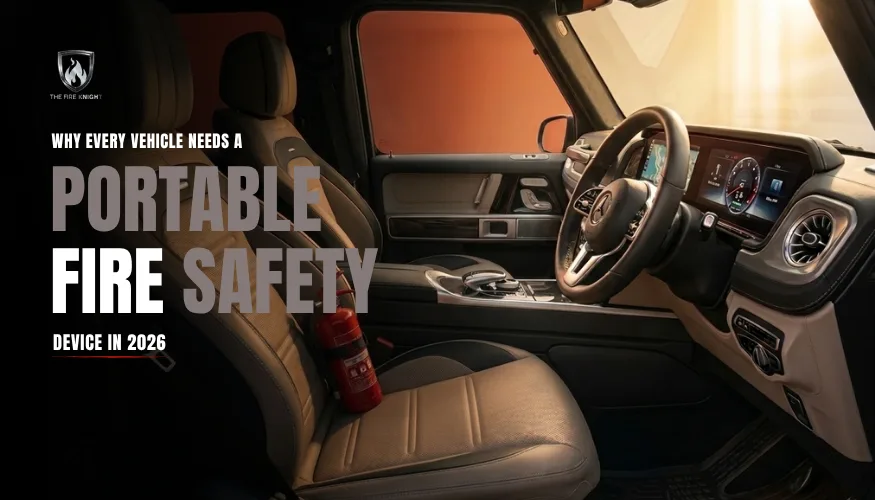
In 2026, protecting your vehicle means more than locking the doors or checking the engine oil. As vehicles become more advanced, with larger batteries and more electronics, a new risk has grown sharply: fire. Whether it is a family car, a delivery truck, a camper van, or an electric vehicle charging in the driveway, onboard fires are rising, and so is the need for an in-vehicle fire safety device.
The Fire Risk Hiding in Plain Sight
Vehicles are engineering marvels, but under the bonnet sits a delicate mix of heat, fuel, power, and flammable materials. A single fault, a frayed wire, an overheating battery, or a small fuel leak, can turn dangerous within seconds. Common causes of vehicle fires today include:
- Electrical failures in EVs, hybrids, or poorly installed accessories
- Overheated components, often worse in the Indian summer
- Fuel system faults and high-pressure fluid leaks
- Battery overloads in vehicles fitted with inverters or solar panels
These fires rarely announce themselves. There is often just a smell, a flicker, and within seconds, smoke or flames.
Why India Faces a Growing Vehicle Fire Risk
India has one of the largest and fastest-growing vehicle populations in the world, and summer road temperatures are among the harshest anywhere. Three trends are pushing vehicle fire safety up the agenda:
1. The Rise of Electric Vehicles
EV adoption is accelerating across India, and with it the risk of thermal runaway in lithium-ion batteries. These fires burn hotter and faster, and are far harder to control with a conventional extinguisher.
2. Long-Distance and Commercial Use
Trucks, buses, and delivery fleets cover huge distances, often through remote areas where help is far away. Continuous engine load and heat raise the risk of an on-road fire.
3. Regulatory and Fleet Pressure
Fleet operators, school transport, and commercial carriers face rising expectations for onboard fire suppression, in line with the National Building Code and evolving vehicle safety norms.
What Is a Portable Fire Safety Device?
A portable fire safety device is different from a heavy handheld extinguisher. It is a compact, self-contained unit that can detect and suppress a fire automatically. It can be fitted under a seat, inside an engine bay, or near the battery. Some units activate manually, while others trigger on their own using heat or gas sensors.
The Benefits of Installing One
- Fast reaction saves lives: a fire can double in size every 30 seconds, so an automatic response buys crucial escape time.
- No fumbling in panic: modern devices need no aiming or pin-pulling. They are set-and-forget, always on standby.
- Minimal clean-up: advanced suppression aids leave little residue and are designed not to damage electronics.
- Peace of mind on every drive: from a city commute to a highway run, a backup is always on board.
- Insurance and compliance benefits: some insurers reward onboard fire safety, and for commercial fleets it is fast becoming expected.
Who Should Install One?
Almost every driver benefits, but these groups are most at risk:
- Commercial drivers with tool-filled vans and battery equipment
- Caravan and RV travellers
- Electric and hybrid vehicle owners
- School buses and transport companies
- Delivery riders, couriers, and rideshare drivers
- Regional or remote drivers far from emergency services
What to Look For in a Vehicle Fire Device
| Feature | Why It Matters |
|---|---|
| Automatic and manual activation | Responds even if no one can reach it in time |
| Multi-class coverage (A, B, C) | Handles solids, fuels, and electrical fires |
| Vibration and heat tolerance | Survives real road and engine-bay conditions |
| Minimal residue | Protects electronics and cuts clean-up cost |
| Compact, discreet design | Fits engine bays, seats, and battery zones |
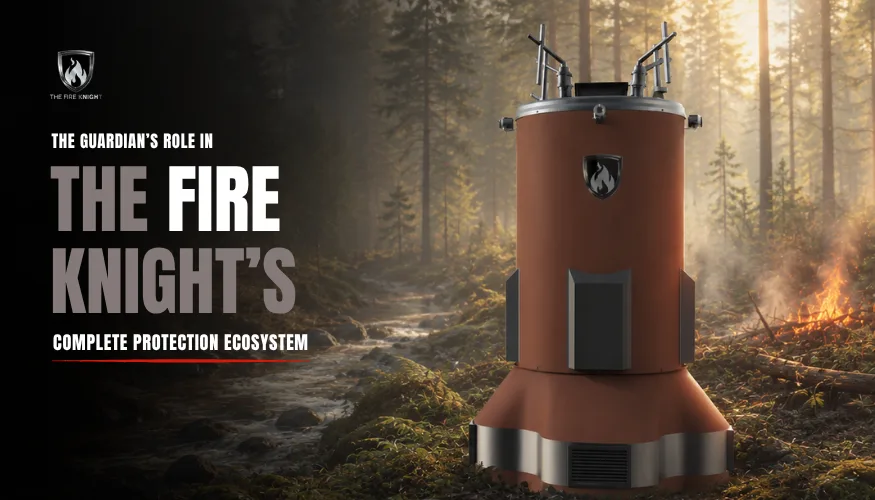
The Fire Knight offers two systems engineered for exactly this. The Sentinel is purpose-built for vehicles, covering engine and battery zones, while The Ranger suits heavy machinery, trucks, and mining vehicles. Both are compact, pre-charged, and always ready.
Conclusion
You never plan for a fire, but when one starts, you either have a device on board or you do not. In 2026, an in-vehicle fire safety device is not just about safety. It is about responsibility, for your family, your fleet, and your future. Pair it with sound habits and regular maintenance to keep it dependable.
To protect your vehicle or fleet with technology built for Indian roads, talk to our fire safety experts, or become a distributor to bring The Fire Knight to your region.