 5 min read
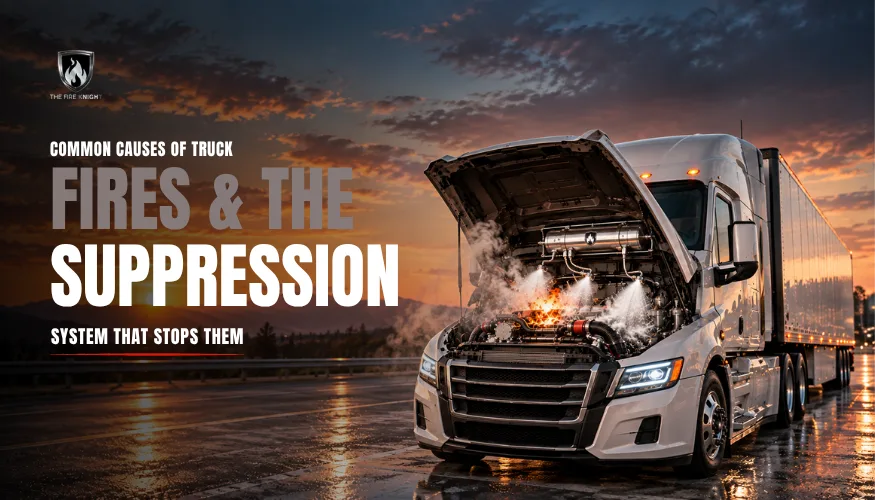
A truck fire rarely starts with a crash. Most begin quietly: diesel dripping onto a hot turbocharger, a chafed wire under the cab, or a dragging brake on a long ghat descent. By the time the driver sees smoke in the mirror, the engine bay or a tyre is already burning.
For Indian fleet owners, one fire can cost a vehicle, its cargo, and sometimes lives. This guide covers the most common causes of truck fires and how an automatic vehicle fire suppression system buys the time a portable extinguisher cannot.
What the Data Says About Truck Fires
According to the NFPA vehicle fires report, mechanical failure or malfunction was the leading factor in 44 percent of large truck fires, and truck fires were more likely than other vehicle fires to start with a tyre. The US Fire Administration’s highway vehicle fire study found electrical failures, such as short circuits, contributed to 21 percent of highway vehicle fires.
India publishes no national breakdown of truck fire causes, but the risk is plain. On 20 December 2024, a truck struck an LPG tanker on the Jaipur-Ajmer highway. The damaged outlet nozzle leaked gas, which ignited and destroyed 40 vehicles, including 29 trucks. The death toll later rose to 20.
The 7 Most Common Causes of Truck Fires
| Cause | How it starts | How to prevent it |
|---|---|---|
| Fuel and oil leaks | Diesel or engine oil drips onto the exhaust manifold or turbocharger | Inspect hoses, clamps and fuel lines at every service |
| Electrical faults | Chafed wiring, loose battery terminals or poor add-on fittings short circuit | Secure harnesses, use correct fuses, avoid unauthorised wiring |
| Overheated brakes | Dragging or overused brakes on ghat roads heat drums until grease ignites | Use engine braking, adjust brakes, take cooling stops |
| Tyre fires | An underinflated or flat dual tyre rubs and overheats | Check pressures daily, especially dual tyres |
| Turbo and exhaust failure | Worn seals spray oil onto surfaces hot enough to ignite it | Replace worn seals early, keep heat shields fitted |
| Cargo fires | Flammable, hazardous or poorly secured loads, including lithium batteries | Follow hazardous goods rules, secure and separate loads |
| Collisions | Ruptured tanks release fuel or gas near hot parts | Driver training, speed control and rest breaks |
Why tyre and brake fires are so dangerous
Rubber holds heat, so a tyre that looks out can reignite minutes later. Opening the bonnet on an engine fire also feeds it fresh air.
Safety first: If flames are large, stop, switch off the engine, get everyone clear and call the fire service on 101 or emergency services on 112.
Indian Rules Fleet Operators Should Know
- CMVR 1989, Rules 129 to 137: these govern dangerous and hazardous goods. The consignor must ensure the vehicle carries the necessary safety equipment, and the driver must take every precaution against fire, explosion, or leakage.
- AIS-135: MoRTH requires engine compartment fire detection and suppression on long-distance and school buses, and in January 2022 extended fire protection to the passenger compartment. It is written for buses, but it shows where Indian vehicle safety is heading.
- Petroleum tankers: the Andhra Pradesh Transport Department notes that about two-thirds of hazardous goods carriers move flammable petroleum products.
How an Automatic Truck Fire Suppression System Works
- Detect: sensors watch the engine bay, cab or battery zone for flame and heat.
- Alert: the driver is warned so they can pull over safely.
- Suppress: agent discharges through nozzles aimed at the hazard, with nobody opening the bonnet.
- Buy time: the fire is knocked down or slowed, giving people time to escape and responders time to arrive.
Why Automatic Fire Suppression Makes a Difference
| Feature | Portable extinguisher | Automatic suppression aid |
|---|---|---|
| Needs a person? | Yes | No |
| Reaches engine bay | Only after opening the bonnet | Nozzles already inside the zone |
| Response | After someone notices smoke | Seconds after detection |
| Works when parked | No | Yes |
Choosing the Right System for Your Fleet
The Sentinel truck fire suppression aid is built for trucks and logistics fleets. It uses up to four modules with 120 degree full cone nozzles, and in normal mode only the triggered module discharges, saving fluid for a second flare up.
For tippers, earthmovers and mining haul trucks, The Ranger heavy vehicle fire protection system suits larger engine bays. Depots need cover too: The Guardian outdoor fire suppression aid protects open yards and fuel areas, while The Protector indoor fire protection covers workshops and offices.
Truck Fire Prevention Checklist
- Walk around the truck daily for leaks, damage and tyre pressures.
- Feel for hot wheel hubs after long ghat descents.
- Let only authorised electricians fit lights, chargers or trackers.
- Train drivers to stop, switch off, evacuate and call 101.
Protect Your Fleet Before the Next Long Haul
Most truck fires are preventable. Combine maintenance, driver training and automatic suppression, and a small fault stays a small fault.
Talk to a Fire Knight fleet fire expert for a vehicle risk assessment, or find an authorised Fire Knight distributor near you. You can also meet the team behind The Fire Knight and explore more fire safety guides for Indian businesses.
Frequently Asked Questions
Mechanical failure, mainly fuel or oil leaking onto hot engine parts, followed by electrical faults and overheated brakes or tyres.
AIS-135 mandates them for long-distance and school buses. For goods trucks, check CMVR hazardous goods rules and your consignor and insurer requirements.
It can knock the fire down and slow it, but tyres can reignite. Professional fire response is still required.