 4 min read
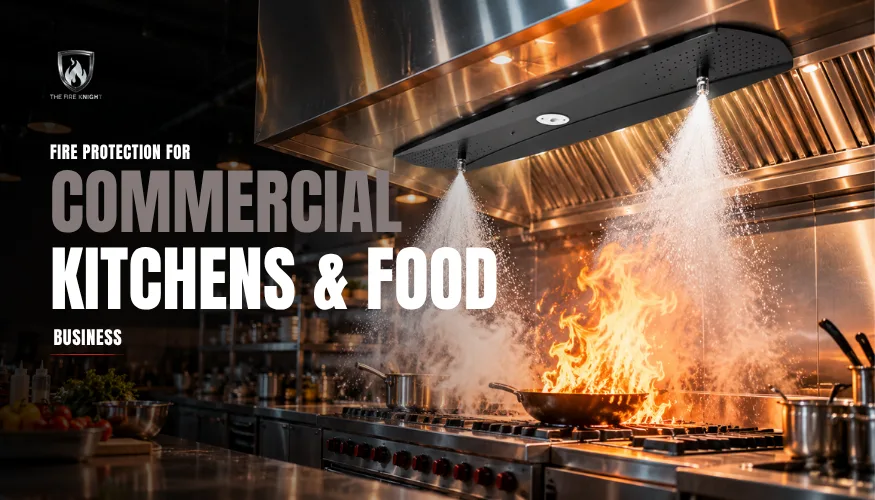
A commercial kitchen packs open flames, hot oil, LPG, grease-laden exhaust, and busy people into one small space. Add late-night closing, crowded dining rooms and flammable decor and it is easy to see why food businesses need serious fire planning.
This guide explains where kitchen fires start, what Indian rules expect, and how to build layered restaurant fire protection that keeps staff, guests, and the business safe.
How Often Do Restaurant Fires Start in the Kitchen?
India does not publish a breakdown of restaurant fire causes, so the best detailed data comes from the US. The NFPA study of eating and drinking establishments found that cooking equipment was involved in 61 percent of fires, 59 percent started in the kitchen or cooking area, and cooking materials such as food and grease were the first items ignited in 43 percent.
The consequences can be severe. In the Kamala Mills fire in Mumbai on 29 December 2017, 14 people died when fire spread across two rooftop venues. Investigators pointed to hookah embers, bamboo canopies and flammable decor, while the rooftop emergency exit was reportedly blocked.
The Main Causes of Commercial Kitchen Fires
| Cause | What happens | How to prevent it |
|---|---|---|
| Unattended cooking | Oil in a kadai or fryer overheats and ignites | Never leave hot oil unattended; use thermostats |
| Grease build-up | Grease in hoods, filters and ducts catches fire and spreads | Clean filters weekly and ducts on a schedule |
| LPG leaks | Loose regulators or damaged hoses release gas | Check hoses and valves; store cylinders outside |
| Electrical faults | Overloaded sockets, fridges and ovens overheat | Use qualified wiring; no extension boards |
| Flammable decor | Curtains, bamboo and fabric spread fire into dining areas | Use fire retardant materials |
| Hookah and candles | Embers and open flames reach soft furnishings | Keep flames well away from decor |
Never use water on an oil fire. Water flashes to steam and throws burning oil across the kitchen. Switch off the gas, cover the pan with a lid or fire blanket, or use a wet chemical extinguisher.
What Indian Rules Expect
- National Building Code 2016, Part 4: the NBC published by BIS sets exit, detection, alarm and firefighting provisions by occupancy and size. Your local fire service applies these when issuing a fire NOC.
- Gas Cylinders Rules 2016: under Rule 44, storing more than 100 kg of LPG at a time needs a licence. That is just over five 19 kg commercial cylinders.
- IS 2189: this code for automatic fire detection and alarm systems guides detector choice. Kitchens usually need heat detectors, because smoke detectors can cause false alarms from cooking fumes.
- IS 2190: covers selection and maintenance of portable extinguishers, including the right type for cooking oil fires.
Building Layered Fire Protection
No single device protects a whole restaurant. The safest food businesses combine several layers:
- Kitchen hood suppression system: a wet chemical system over fryers, ranges and tandoors, with automatic gas shut-off. This is essential over the cooking line.
- Detection and alarm: heat detectors in the kitchen and smoke detectors elsewhere.
- Portable extinguishers and fire blankets: wet chemical near cooking, and ABC or CO2 near panels.
- Targeted automatic suppression aids: for the rooms and equipment the hood system does not cover.
Where The Fire Knight Systems Fit
Fire Knight systems are fire suppression aids for the spaces around the cooking line, not a replacement for a hood suppression system over it
| Area | Suitable protection |
|---|---|
| Dry stores and back of house | The Protector indoor fire suppression aid |
| Electrical panels, UPS and server cabinets | The Comodo compact fire suppression system |
| Food trucks and delivery vans | The Sentinel vehicle fire suppression aid |
| Cloud kitchens and cafes after hours | Automatic room protection with The Protector |
Daily Kitchen Fire Safety Checklist
- Switch off gas at the main valve after closing.
- Clean hood filters and check for grease on walls and ducts.
- Keep extinguishers visible, charged and within reach.
- Keep exits and passages clear of stock, kegs and chairs.
- Train every shift on the gas shut off and evacuation.
Speak to a Fire Knight expert about restaurant fire safety, find a Fire Knight distributor in India or become a Fire Knight distributor. You can also learn more about The Fire Knight and read more fire safety guides for Indian businesses.
Frequently Asked Questions
A wet chemical extinguisher for cooking oil fires, plus ABC or CO2 extinguishers for electrical and general fires.
Many do, depending on size, seating and state rules. Check with your local fire service before opening or renovating.
No. The cooking line needs a dedicated hood system. Suppression aids protect the surrounding rooms and equipment, and professional emergency response is still required.
Most kitchen fires are preventable with clean hoods, safe gas handling, and trained staff. Layered protection makes sure a small flare-up never becomes a closed business